Boiler Repair Fordham Bronx
Reliable, methodical troubleshooting and diagnostic inspection for residential steam boilers, hydronic hot-water systems, and no-heat emergencies across Fordham, Bronx, New York.
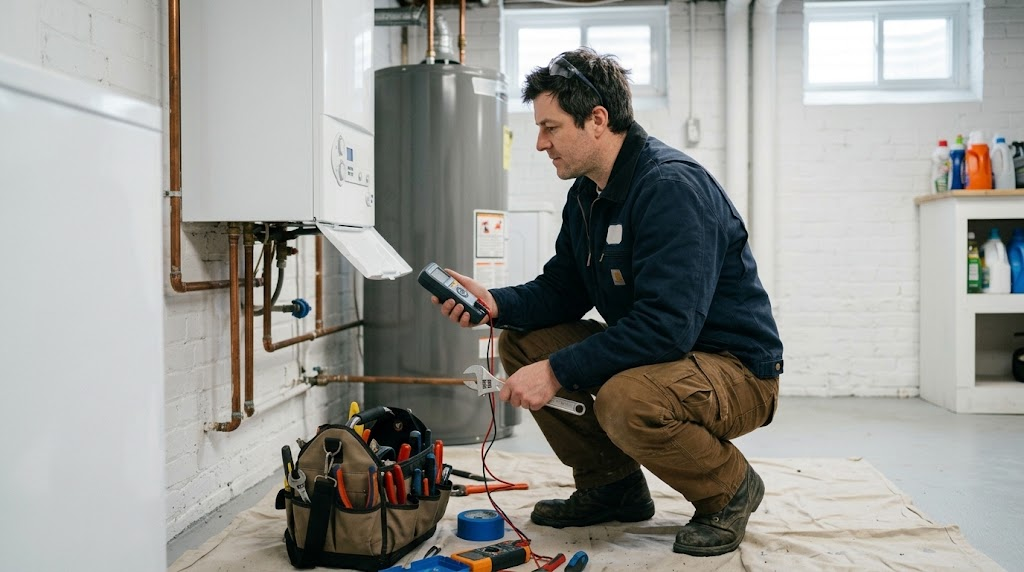
Methodical Boiler Diagnostics in Fordham Properties
Residential buildings along Grand Concourse, Creston Avenue, Jerome Avenue, and East Fordham Road rely on dependable heating systems through the harsh winter months. Understanding how steam and hydronic boilers operate helps property owners identify mechanical anomalies early.
Low-Pressure Steam Boiler Systems
Many pre-war walk-ups and multi-family residences throughout Fordham feature single-pipe or two-pipe steam systems. These systems generate steam at low pressures (typically between 0.5 and 2.0 PSI) to heat cast-iron radiators. Common steam heating concerns include:
- Low-Water Cutoff (LWCO) Tripping: Float chambers accumulating sediment or electrical probes losing sensitivity, shutting off fuel delivery for safety.
- Clogged Pressuretrol Pigtails: Mineral residue and rust clogging the brass siphon loop, blinding the pressure switch and causing rapid short-cycling.
- Sight Glass Gauge Water Levels: Discolored, clouded, or fluctuating gauge glass preventing accurate monitoring of safe water boundaries.
- Main Line Steam Traps: In two-pipe buildings, worn thermostatic traps blowing live steam into condensate returns, collapsing overall system efficiency.
Closed-Loop Hydronic (Hot Water) Boilers
In updated homes, duplexes, and zoned commercial buildings across the West Bronx, hydronic heating loops circulate pressurized hot water (12 to 20 PSI) to baseboard convectors or radiant floor manifolds. Frequent hydronic concerns include:
- Seized Circulator Pumps: Motor bearing wear or failed starting capacitors preventing hot water from moving through upper-floor loops.
- Waterlogged Expansion Tanks: Loss of pre-charged air cushion leading to thermal expansion spikes that trigger the 30-PSI pressure relief valve.
- Air-Bound Convector Loops: Pockets of trapped atmospheric air creating airlocks that leave radiators completely cold.
- Aquastat Relay Disconnects: Faulty immersion sensors or burner control boards failing to call for ignition when water temperatures fall.
Common Symptoms Requiring Professional Assessment
Boiler symptoms rarely resolve on their own. Identifying early warning signals allows technicians to assess operating conditions before complete heating shutdown occurs.
Boiler Will Not Start
An unresponsive boiler can result from an open thermal spill switch, tripped roll-out safety, depleted pilot ignition thermocouple, blown 24V control transformer, or an activated low-water cutoff. A technician tests electrical and safety boundaries with precision meters.
Insufficient or Inconsistent Heat
When burners fire normally but rooms remain chilly, issues frequently involve heavy scale insulation on the water-side heat exchanger, improper pressuretrol cut-in/cut-out settings, or defective radiator venting that restricts heat transfer.
Unusual Noises & Banging
Violent knocking or hammering inside steam pipes indicates condensate water colliding with steam inside poorly pitched branches. Rumbling or kettling inside the boiler jacket indicates localized boiling beneath heavy sediment layers.
Experiencing Heating Irregularities in Fordham?
Discuss your boiler symptoms with a professional heating technician by telephone.
Boiler Diagnostic Assessment Matrix
A breakdown of operating characteristics, failure indicators, and diagnostic actions across residential boiler systems.
| System Type | Standard Operating Pressure | Common Failure Symptom | Technical Diagnostic Action |
|---|---|---|---|
| Low-Pressure Steam | 0.5 to 2.0 PSI (Controlled by Pressuretrol) | Radiators cold, banging pipes, low water lockout | Clear pigtail siphon, flush sediment chamber, inspect LWCO probe |
| Hydronic Closed-Loop | 12 to 20 PSI (Controlled by Auto-Fill Valve) | Cold baseboards upstairs, dripping 30-PSI valve | Purge airlocks, test expansion tank charge, check pump amperage |
| Atmospheric Gas Burner | 3.5" W.C. Manifold Fuel Pressure | Burner fails to spark, flame rollout, sooting | Inspect thermocouple, clean pilot orifice, verify chimney draft |
| Electronic Ignition Gas | Intermittent Pilot / Hot Surface Igniter | Lockout code flashing, flame sensor dropout | Measure microamps on flame rectification rod, test 24V transformer |
What to Expect During a Professional Service Visit
We approach heating diagnostics systematically to evaluate safety switches, combustion dynamics, and water distribution before conducting authorized repairs.
Initial System Inspection & Safety Verification
The technician reviews reported heating symptoms, verifies that electrical service switches are engaged, inspects chimney draft hoods for exhaust spillage, and checks for visible water leaks.
Electrical & Control Circuit Analysis
Testing incoming 120V line voltage, thermostat calling circuits, low-voltage 24V transformers, aquastats, and safety limit switches using calibrated multimeters.
Fuel Delivery & Combustion Testing
Evaluating gas supply valves, manifold pressures, pilot assemblies, flame rectification sensors, and electronic ignition modules to ensure clean, controlled ignition.
Hydronic or Steam Trim Inspection
Checking pressure relief valves, expansion tanks, sight glass seals, low-water cutoff float chambers, and circulator pumps under actual operating temperature.
Authorized Repair & Operational Testing
Explaining identified root causes, reviewing practical repair or component replacement options, and testing the completed work through a full firing cycle.
Supporting Plumbing & Heating Services in Fordham
Heating performance is interconnected with broader building plumbing and fuel infrastructure. Explore our specialized service pages:
Boiler Replacement
When cracked cast-iron sections or severe internal scaling make repair impractical, correct radiation sizing and code-compliant installation provide long-term reliability.
Steam Heat & Radiators
Troubleshoot noisy clanging steam pipes, cold cast-iron radiators, leaking valve packings, and improper radiator slope across pre-war Bronx residences.
Water Heater Repair
Resolve sudden loss of domestic hot water, extinguished pilot assemblies, leaking relief valves, and indirect water heater tanks connected to central boilers.
Gas Line Repair
Professional inspection, pressure testing, and code-compliant piping repair for heating equipment and gas appliances following NYC Department of Buildings standards.
Leak Detection
Locate concealed water leaks inside walls, behind plaster, or beneath basement slabs before structural moisture damage harms electrical or heating infrastructure.
Drain Cleaning
Clear stubborn branch waste line stoppages, grease accumulation, and slow sink drains using motorized mechanical snaking and diagnostic inspection.
Sewer Line Repair
Diagnose chronic basement floor backups, offset underground clay pipes, and root intrusions through fiber-optic video camera inspections and lateral repairs.
Service Areas
Coverage across Fordham, Fordham South, Belmont, Bedford Park, University Heights, and Mount Hope.
Direct Phone Contact
Speak with a heating technician to review symptoms and coordinate diagnostic visits.
Frequently Asked Questions: Boiler Repair in Fordham
Practical answers to common heating and boiler operation questions.
What are common signs that a boiler needs repair?
Common warning indicators include a boiler that fails to fire, frequent short-cycling on and off, persistent clanging or banging sounds in heating pipes, water weeping around pressure relief valves or cast-iron push nipples, uneven heating across radiators, and unusual odor or soot around the burner compartment.
Why might a boiler run without heating the home properly?
A boiler may burn fuel without adequately heating living spaces due to heavy mineral scale or sediment insulating the heat exchanger, a failing circulator pump unable to push hot water through hydronic zones, trapped air pockets in piping, or an obstructed pigtail siphon tube preventing the pressuretrol from cycling correctly.
Why are radiators heating unevenly in my Fordham property?
In single-pipe steam systems, uneven radiator temperatures usually point to clogged or improperly sized radiator air vents that trap cold air inside cast-iron sections, preventing steam from entering. On hydronic baseboard loops, uneven heat typically stems from airlocks or failing zone valves.
What should I do if I notice a leak near my boiler?
Check if the leak is clear water discharging from the 30-PSI pressure relief valve pipe, which may indicate thermal expansion issues or a waterlogged expansion tank. If water is seeping from between cast-iron boiler sections or fuel piping connections, shut off the boiler switch and call a professional technician for prompt evaluation.
How can I contact NY Plumbing about a boiler problem in Fordham?
You can call NY Plumbing directly at +1 (315) 202-8009. Our team will discuss your specific boiler symptoms, describe diagnostic steps, and schedule a technician to evaluate your heating system in Fordham, Bronx.
Restore Reliable Heating in Your Fordham Property
When heating equipment fails during cold weather, prompt diagnosis protects property infrastructure and restores indoor comfort. Contact NY Plumbing now to discuss your heating issue with an experienced professional.
Call (315) 202-8009 Today